


Metal stamping is a manufacturing process used to cut and form sheet metal into specific shapes and features with stamping dies and presses. The metal stamping process may involve one or several operations, depending on the geometry, material, thickness, and dimensional requirements of the component.
Common operations include blanking, punching, bending, embossing, and deep drawing. The sequence and combination of operations are determined by the design and manufacturing requirements of the stamped part.
For a basic introduction to metal stamping, see our guide to What Is Metal Stamping.
What Is the Metal Stamping Process?
In the metal stamping process, sheet metal is positioned in stamping tooling and subjected to controlled force from a press. The die determines the shape or feature being produced, while the press provides the force required to cut or form the material.
Depending on the component, the production sequence may include several operations:
Sheet Metal → Tool Setup → Cutting or Forming → Additional Stamping Operations → Inspection
Not every component requires every operation. A simple part may be produced through one cutting operation, while a more complex component may require multiple cutting and forming operations in a defined sequence.
The process is determined by factors such as material type, sheet thickness, part geometry, dimensional requirements, and tooling design.


Blanking
Blanking is a cutting operation used to separate the required outer contour of a part from a sheet of metal.
During blanking, the punch applies force to the sheet against the die and cuts the material along a predetermined profile. The separated piece becomes the blank for subsequent operations or, depending on the component design, may be the finished part itself.
Blanking is commonly used at the beginning of a stamping sequence when the component requires additional punching or forming.
The tooling design needs to account for material thickness, cutting clearance, required dimensions, and edge condition.
Punching
Punching is a cutting operation used to create holes, slots, and other openings in sheet metal.
The punch enters the material through a corresponding die opening and removes the required section. The shape, size, and position of the opening are controlled by the tooling.
Common punched features include:
- Mounting holes
- Round holes
- Slots
- Rectangular openings
- Other specified openings
Punching is often combined with blanking and bending. For example, a stamped bracket may first be cut to its external profile and then punched to create holes required for assembly.
Bending
Bending changes the geometry of sheet metal by applying force along a defined line.
During the operation, the tooling forces the material into the required angle or configuration. Unlike blanking and punching, bending changes the shape of the material without removing a section.
Bending can create features such as:
- Flanges
- Tabs
- Angles
- Brackets
- Formed sections
The result depends on material properties, sheet thickness, bend radius, tooling geometry, and forming conditions.
Surface condition may also need to be controlled. Scratches, indentations, and other tooling marks can be important considerations when the finished component has specific surface requirements.
Embossing
Embossing forms a raised or recessed feature on the surface of sheet metal.
The stamping die applies localized pressure to deform the material into the required shape. Depending on the component, embossed features can provide structural or identification functions.
Typical embossed features include:
- Reinforcing ribs
- Raised markings
- Identification numbers
- Logos
- Other surface features
Embossing can increase the rigidity of certain sheet metal components by introducing ribs or other formed features.
Material thickness and formability should be considered when designing an embossed feature to reduce the risk of excessive deformation or cracking.
Deep Drawing
Deep drawing is a forming operation that transforms a flat metal blank into a three-dimensional component by drawing the material into a die cavity.
During deep drawing, the blank is held and drawn into the cavity under controlled force. The material undergoes plastic deformation as it takes the shape of the die.
Deep drawing can be used to manufacture components such as:
- Housings
- Cups
- Containers
- Covers
- Cylindrical components
- Other three-dimensional sheet metal parts
The result is influenced by material properties, sheet thickness, die geometry, drawing depth, and forming conditions.
For deeper or more complex components, careful tooling and process design are required to control material flow and reduce defects such as wrinkling, tearing, or excessive thinning.
For more information about this specific process, see our Deep Drawing Services.
Combining Stamping Operations
A finished stamped component may require several operations to achieve its final geometry.
For example, a metal bracket may follow a sequence such as:
Blanking → Punching → Bending → Inspection
A more complex component may require additional embossing or forming operations before final inspection.
The sequence is determined by the geometry of the component and how the material needs to be cut or deformed during production.
This makes process planning and die design important parts of stamping production. Each operation must be positioned and sequenced appropriately to achieve the required geometry and dimensional consistency.
For custom components, the production sequence is normally developed from the customer’s 2D drawing or 3D model before tooling and production begin.
Stamping Dies and Presses
A stamping die provides the working geometry for cutting or forming, while the press supplies the force required for the operation.
The die and press must be suitable for the material and requirements of the component. Important considerations include:
- Material type
- Sheet thickness
- Part dimensions
- Required force
- Part geometry
- Required operations
- Dimensional requirements
Tooling design is closely connected to the stamping process because the die determines how the material is positioned, cut, or formed during production.
Metal Stamping Process at Kailai
Kailai Machinery applies different stamping operations according to the requirements of custom stamped metal components.
Our equipment includes 35T–250T mechanical presses and 160T–315T hydraulic presses. Depending on the material and component design, our stamping production covers sheet thicknesses from 0.2 mm to 8 mm.
Kailai primarily uses single-stage dies for custom metal stamping projects. When a component requires multiple operations, the individual operations can be completed in a planned sequence according to the part geometry and tooling design.
Our in-house tooling workflow includes die design, CAD/3D drawing, die manufacturing, and die assembly.
For information about Kailai’s commercial metal stamping capabilities and production services, visit our Metal Stamping Service.
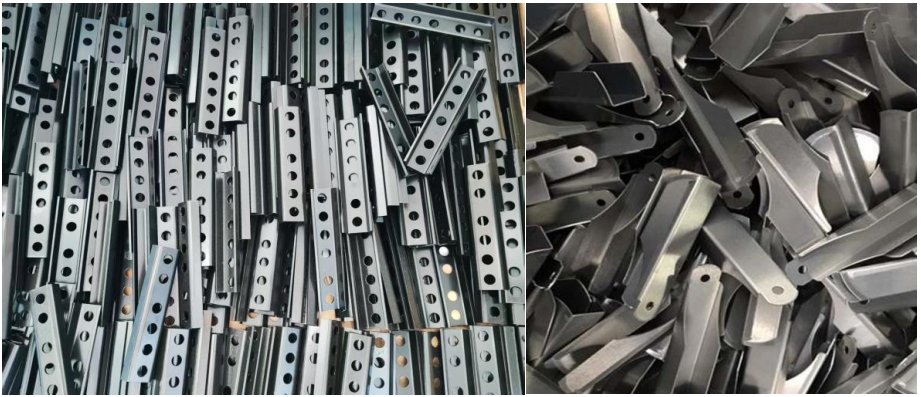
Inspection During the Stamping Process
Inspection verifies that stamped components meet the required dimensions and specifications throughout production.
Depending on the component, inspection may include:
- Overall dimensions
- Hole diameter and position
- Bend angles
- Formed features
- Critical dimensions
- Surface condition
Inspection requirements should be considered during tooling and process development, particularly when specific dimensions or features affect the function or assembly of the finished component.
Frequently Asked Questions About the Metal Stamping Process
What are the main operations in the metal stamping process?
Common operations include blanking, punching, bending, embossing, and deep drawing. The operations required depend on the geometry and specifications of the component.
What is blanking in metal stamping?
Blanking separates a defined outer profile from a sheet of metal. The resulting blank can then undergo additional stamping operations.
What is punching in metal stamping?
Punching creates holes, slots, or other openings in sheet metal using a punch and die.
Is bending part of the metal stamping process?
Bending is a common operation used in stamping production to change the shape of sheet metal along a defined line. Bending can also be performed as a separate sheet metal forming process.
What is embossing in metal stamping?
Embossing creates raised or recessed features on sheet metal using dedicated tooling. These features can provide structural reinforcement, identification, or other functional characteristics.
What is deep drawing?
Deep drawing forms a flat metal blank into a three-dimensional shape by drawing the material into a die cavity. It is commonly used for housings, cups, containers, and other formed components.
Does every stamped part require multiple operations?
No. Simple components may be produced with a single operation, while components with multiple holes, bends, embossed features, or complex geometries may require several operations.
Conclusion
The metal stamping process uses dies and presses to cut and form sheet metal into components with defined geometries and features.
Blanking, punching, bending, embossing, and deep drawing perform different functions within the production process. Depending on the component design, these operations may be performed individually or combined in a defined sequence.
Proper process planning, die design, press selection, and inspection are important for producing consistent stamped components that meet the required specifications.
Kailai supports custom metal stamping projects with in-house tooling and stamping production, from die development through finished-part manufacturing.